The path of an entrepreneur is often chronicled with a focus on the milestones of business success — funding rounds, product launches, and market expansions. Yet beneath this veneer of commercial triumph lies a profound narrative, a spiritual odyssey that often goes untold. At the heart of entrepreneurship is the essence of creation itself, a venture that transcends mere economic activity and taps into the fundamental human desire for meaning and contribution. To fully grasp this concept, we look to one of the most iconic entrepreneurs of our time, Steve Jobs, whose journey encapsulates the quintessential blend of spirituality and innovation. His path not only redefined technology but also echoed the spiritual hallmarks of self-discovery, resilience, and transcendence.
Heeding the Inner Call
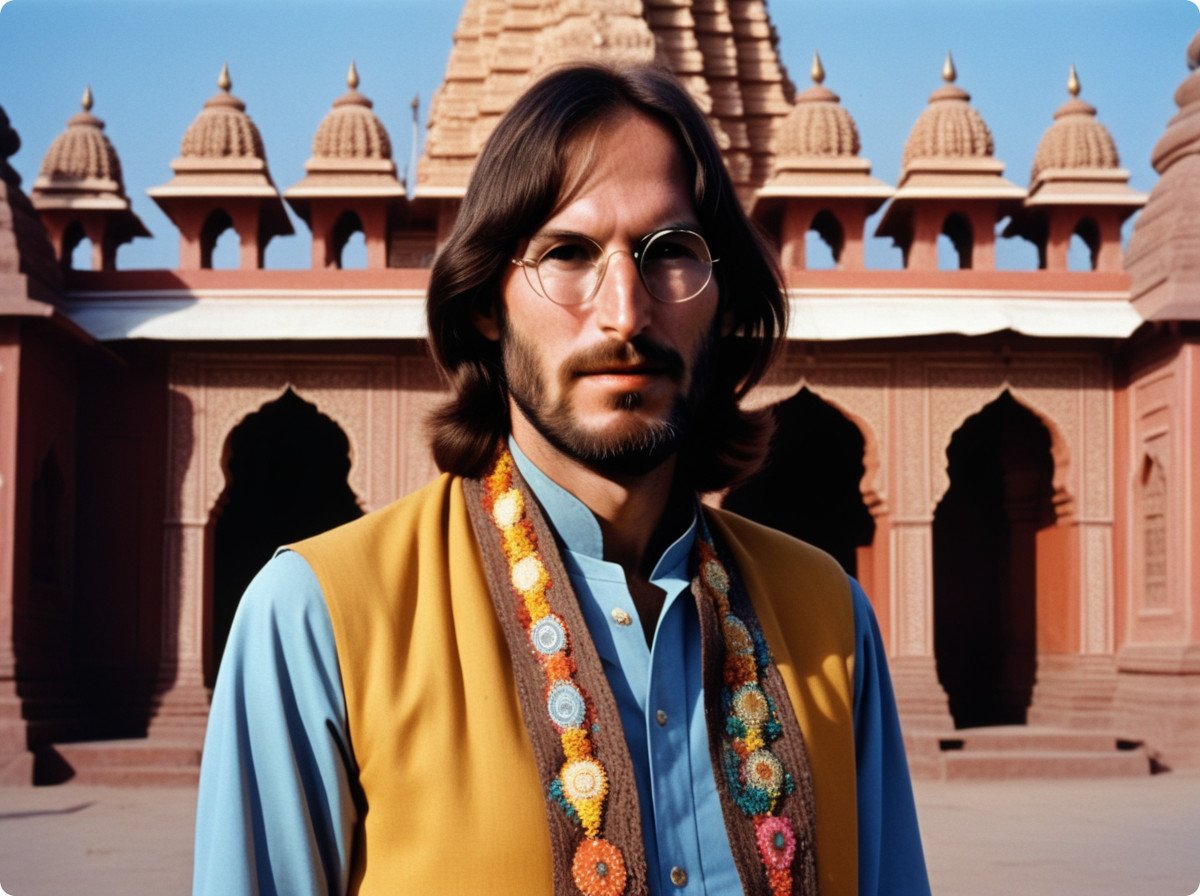
Before the inception of Apple, before the idea of a personal computer had fully taken shape, there was a young Steve Jobs who was already on a quest — not for wealth or fame, but for enlightenment. Jobs’ early life was marked by a restless search for a deeper understanding of the world and his place within it. At the age of 19, he embarked on a journey that was to leave an indelible mark on his philosophy of life and business. He traveled to India, seeking spiritual insights and a broader perspective that would later become the bedrock of his professional life.
This trip was more than a mere youthful exploration; it was a pilgrimage that laid the foundations for a unique entrepreneurial spirit. Jobs’ immersion in Zen Buddhism introduced him to concepts of simplicity, intuition, and the interconnectedness of all things — principles that would later suffuse the ethos of Apple. Just as a spiritual seeker listens to the inner voice calling them towards self-realization, Jobs listened to the inner voice urging him to create and innovate. He recognized that entrepreneurship was not a linear path but an organic, evolving journey, much like the spiritual quest that continues to call to individuals across cultures and eras.
Embracing the Pilgrimage of Innovation
The genesis of Apple can be likened to the first steps of a spiritual pilgrimage, an act of faith into the unknown. The garage in Los Altos, California, where Apple was born, served as the initial sanctuary where Jobs and his partner, Steve Wozniak, turned their vision into reality. The inception of Apple was as much a leap of faith as any spiritual venture, driven by the belief in the unseen and the conviction that what they were building could change the world.
Jobs’ experiences in India and his practice of Zen Buddhism contributed to a design philosophy that would become synonymous with Apple: the seamless blend of functionality and aesthetic simplicity. He believed, as in the teachings of Zen, that simplicity is the ultimate sophistication, a credo that became the hallmark of Apple products. Each device was not just a piece of technology but a testament to the belief that the form of an object should align with its function, resonating with the harmonious principles found in spiritual practices.
The journey of Apple’s early days also required the sort of resilience and faith typical of a pilgrim traversing a challenging path. The company’s nascent phase was fraught with uncertainty and setbacks, yet Jobs’ faith in the vision of making technology accessible and intuitive kept the mission alive. In this stage of their entrepreneurial journey, Jobs and Wozniak demonstrated the spiritual virtues of belief in one’s vision, the courage to pursue it against all odds, and the serenity to accept the myriad challenges as part of the growth process.
The Wilderness of Adversity
In the mid-1980s, Steve Jobs faced one of the most tumultuous periods of his career: he was ousted from Apple, the very company he had co-founded. Much like a spiritual seeker is sometimes thrust into the ‘dark night of the soul’, Jobs entered a period of profound professional wilderness. This phase, however, was not the end but rather a transformative interlude that would ultimately deepen his entrepreneurial and spiritual journey.
During this time, Jobs founded NeXT Computer and purchased what would become Pixar Animation Studios. These ventures were not immediate successes, but they became the crucibles within which Jobs refined his vision and leadership. In the spiritual parallel, this period can be seen as a time of introspection and learning — a time where the entrepreneur, stripped of previous titles and accolades, must confront the self and emerge with newfound wisdom.
Resurrection and Renewal
The return of Steve Jobs to Apple in 1997 can be likened to a spiritual resurrection, a narrative familiar to many spiritual traditions where the hero, reborn, comes back with greater power and clarity. It was during this time that Jobs would orchestrate one of the most dramatic turnarounds in business history, elevating Apple to unprecedented heights.
The launch of groundbreaking products like the iMac, iPod, iPhone, and iPad was indicative of Jobs’ renewed creative vision. He applied the lessons from his past — both his successes and his failures — with a spiritual-like conviction in his principles of design, innovation, and user experience. This period of renewal was not just about business growth; it was about manifesting a vision that aligned business with the potential to influence culture and improve lives.
Legacy: Imparting Wisdom
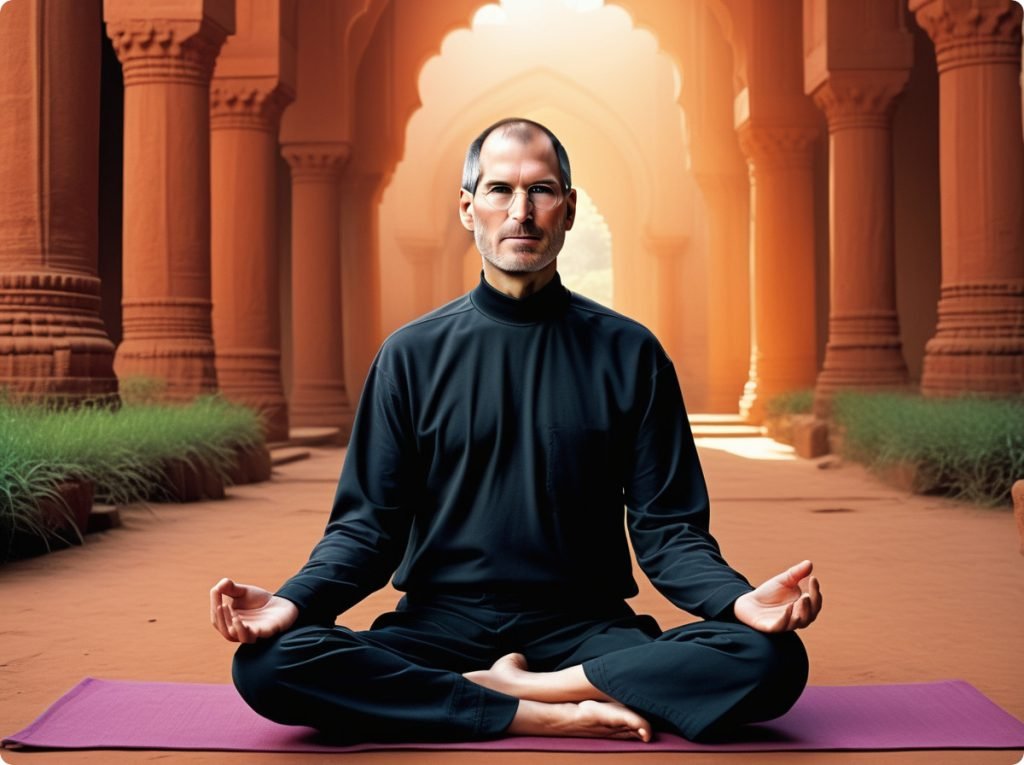
Towards the end of his life, Steve Jobs became increasingly reflective, often sharing the wisdom he had garnered throughout his journey. His famous Stanford commencement speech, where he urged graduates to “stay hungry, stay foolish,” echoed the eternal spiritual exhortation to maintain the beginner’s mind and the continuous pursuit of knowledge.
Jobs left behind a legacy that extends beyond the products Apple created; he left a blueprint for infusing one’s work with passion, purpose, and personal meaning. For entrepreneurs, this is a testament to the potential of combining business acumen with spiritual depth. The lesson imparted is clear: when the path of entrepreneurship is walked with the awareness of its spiritual dimension, it has the power to transform not just markets, but the very essence of the human experience.
The story of Steve Jobs stands as a real-world parable, teaching us that at the intersection of spirituality and entrepreneurship, there lies the opportunity for profound personal and global transformation.
The Convergence of Entrepreneurship and Spirituality
The entrepreneurial path is not merely a career trajectory but a spiritual odyssey that challenges, molds, and ultimately reveals one’s innermost capabilities and convictions. Steve Jobs’ story exemplifies how embracing the spiritual essence of this journey can lead to unparalleled innovation and impact. His life serves as a beacon, showing that the heart of entrepreneurship beats strongest when aligned with a deeper, spiritual calling.
For today’s entrepreneurs, this integration of spirituality is not just a personal choice but a strategic imperative. It is an acknowledgment that at the core of innovation, perseverance, and visionary success lies a spiritual thread that connects the personal quest for meaning with the larger purpose of serving humanity. It is this thread that transforms the ordinary into the extraordinary, infusing products with soul and businesses with a sense of mission.
In honoring this spiritual dimension, entrepreneurs are invited to look beyond the balance sheets and market shares to the broader canvas of their lives and the lives they touch. As we close this exploration, let us remember that the most enduring and meaningful successes are those that resonate with the spirit of who we are and aspire to be — bridging the material with the spiritual, and in doing so, charting a course not just for successful businesses, but for fulfilled lives.
In this spirit, let the story of every entrepreneur be one that is rich in both material achievement and spiritual depth, leaving a legacy that inspires generations to come to embark on their own journeys with courage, innovation, and a heart full of purpose.